8 Sep 2026 Artistic Reflections
“The options for participation are infinite”
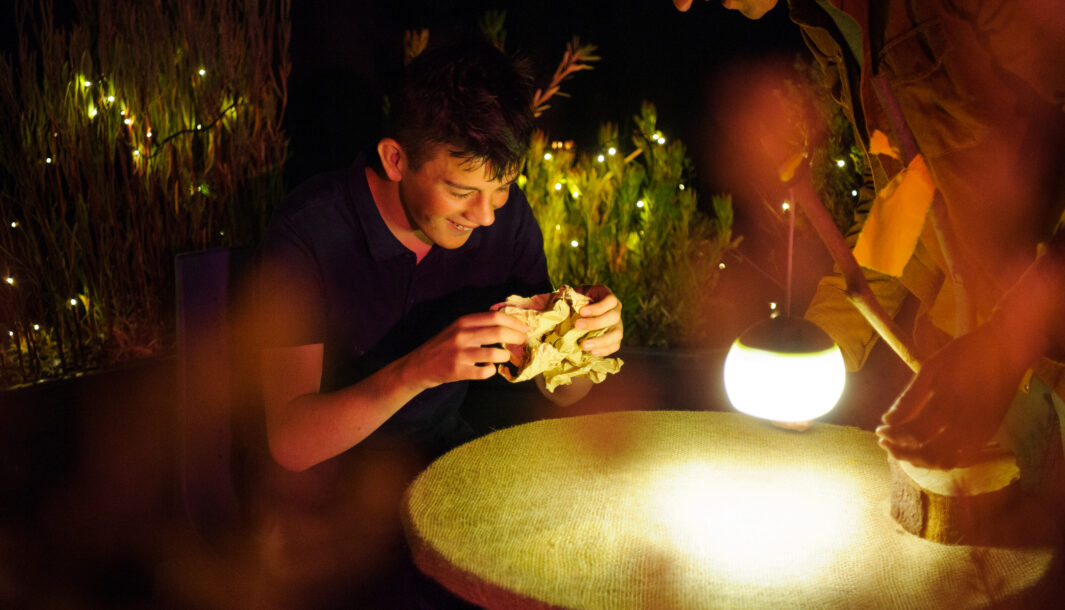
Feature photo: When the World Turns. Sarah Walker.
Polyglot’s engagement with school communities is woven throughout our 48-year history. Now, our longer residencies allow richer, more meaningful connections with students and educators. Many of these take place in specialist and special development schools.
From 2018-2023, with funding from the Victorian Department of Education Strategic Partnerships Program, and the Cassandra Gantner Foundation in 2023, Polyglot toured Paper Planet into 20 specialist and special development schools across Victoria.
In 2023, an in-schools version of When the World Turns, our collaboration with Oily Cart, commissioned by Arts Centre Melbourne, was developed. Since 2024, Polyglot and Arts Centre Melbourne have worked together to tour this version into Victorian specialist and special development schools.
Zak Pidd is one of our Generator artists who has delivered both Paper Planet and When the World Turns extensively in specialist and special development schools. We asked them to create an artistic reflection about this work – here are some excerpts.
A Reflection
The older I get, the more my memory of school changes. It’s impossible not to keep my adult experiences away from the memories of the institutions where I spent so much of my youth. My primary school years felt, at the time, to be mostly joyous and playful. Primary school was just a place I spent time, with friends, and a bunch of grown-ups that weren’t my parents.
High school scared the whimsy out of me for a time and I furiously began the painful process of sculpting an identity in preparation for what came after, and that was… everything else? I remember clearly the liminality of high school, it sat uncomfortably between being a child and being a grown-up, every day was one day closer to the end of something huge and the start of something unknowable.
High school also gave me friends and music and theatre stories. I could, for the most part, always find the flowers growing out of the cracks in the concrete.
MAKING SPACE TO FIGURE THINGS OUT
We set up our When the World Turns performance space in the strangest places, gyms mainly, but sometimes libraries or rooms with too many doors. They are often intermediate spaces that can be sacrificed for a week. Sometimes cold, and in a weird part of the school. What this means though is that we can MOVE IN. We become part of the furniture as quickly as possible. We often meet students and teachers moving from class to class. It doesn’t feel like other shows, we move hundreds of plants through the corridors and erect a whole new structure.
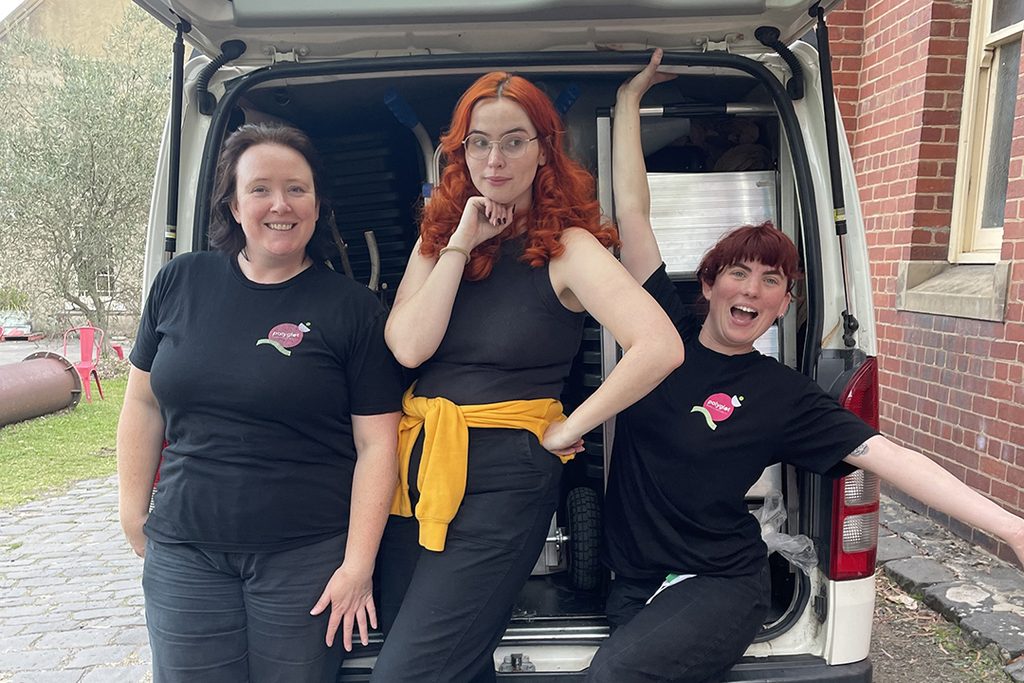
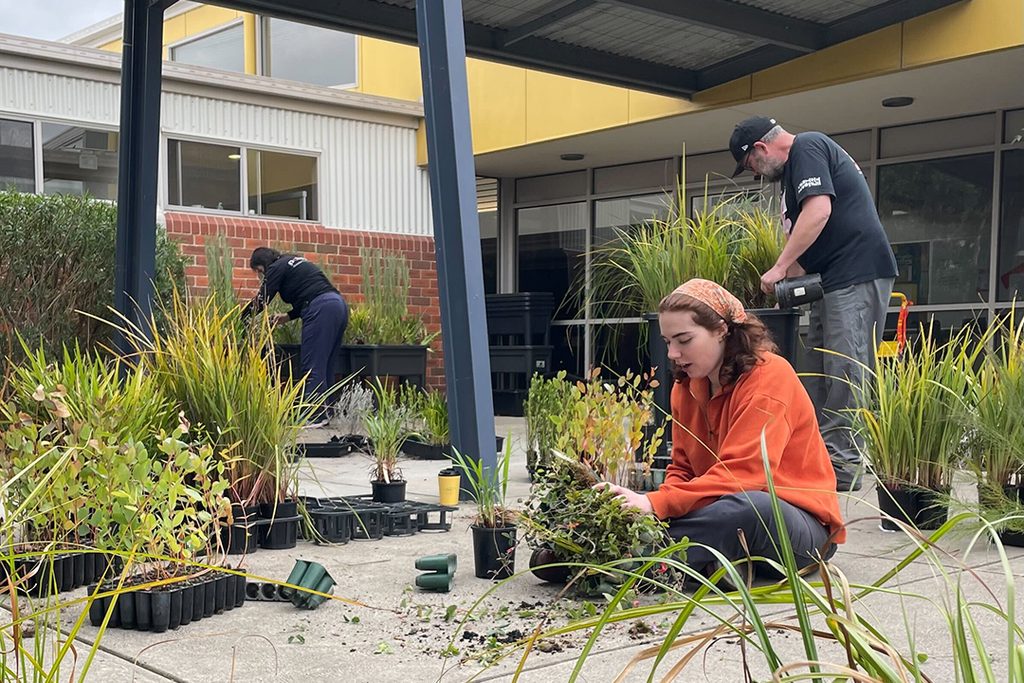
Behind-the-scenes, When the World Turns bump in.
CONTACT
The first day is important, it is the first opportunity to understand the inner workings of the ecosystem we are visiting. I think, because of the immersive nature of When the World Turns, it feels vital to meet our audience where they’re at; they set the tone and we respond. This creates the need for a fluid approach to not only the performance but the time surrounding it, time to check in with classes, time to talk through any potential changes that the work might need.
It is deeply satisfying and emotional work to do but it comes with challenges. The main one being the push and pull of an institution that contains hundreds of people and is, at all times, trying to support as many of them as possible.
But if there is one place that will allow for a certain improvised flexibility, it’s a specialist school. When the World Turns is based around accessibility. The point of the schools’ touring version of the show is to provide an experience usually relegated to a theatre venue to young audiences who can’t usually access those spaces.
The ritual of theatre and the ritual of school are both pretty all-encompassing ones, they are also based around learning and understanding. They both take place in communal spaces created for that singular purpose and I would argue that both school and theatre are incredible ways to get a sense of societal temperature.
They are also, in the eyes of some, polar opposites.
The phrase isn’t, ‘run away to go to school’, you run away to join the circus. While theatres extend out of society, a pocket dimension that filters the world into metaphor and symbolism, schools ARE the world, they are a part of society. Yet schools, at their most powerful, operate in the same way as theatres. They are meta-textual spaces that can take part in society while also stepping back and, in preparing young people for the future, observing what makes up the surrounding communal identity.
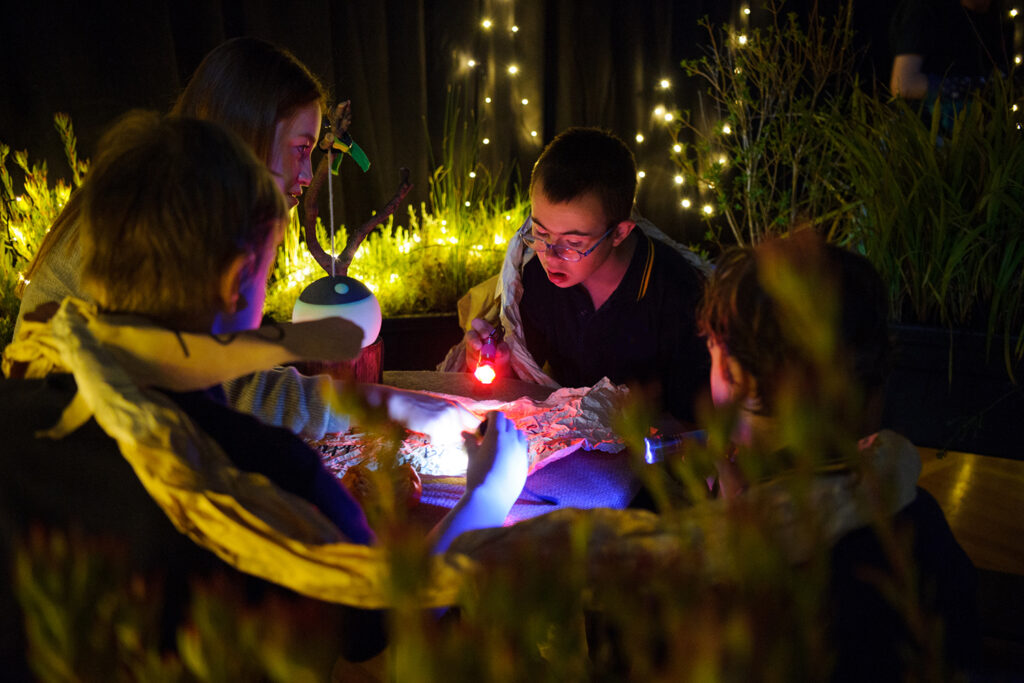
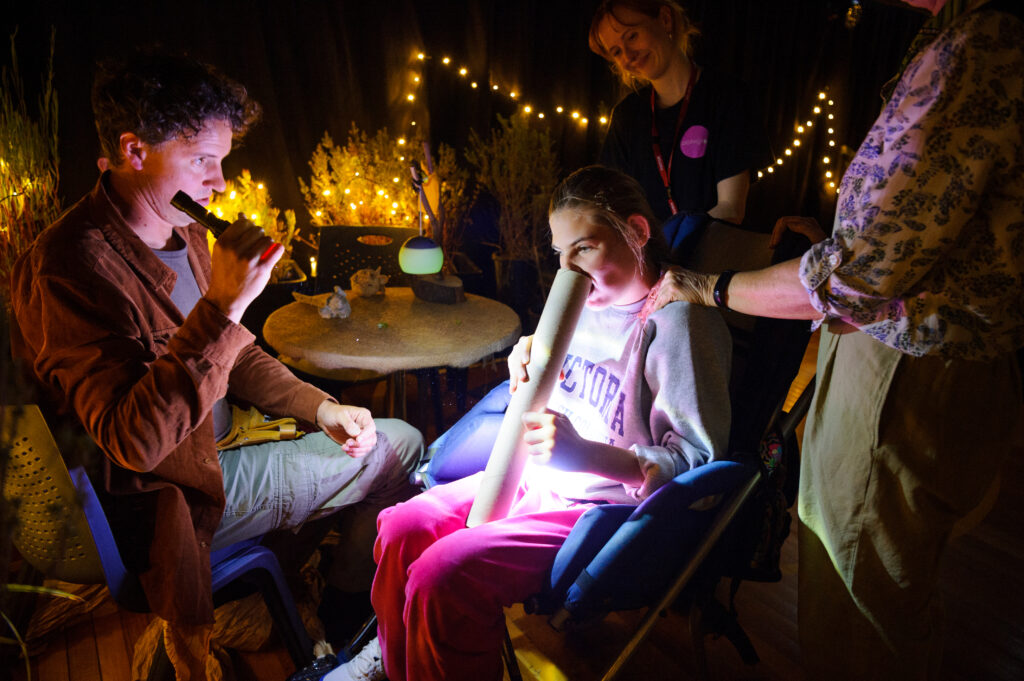
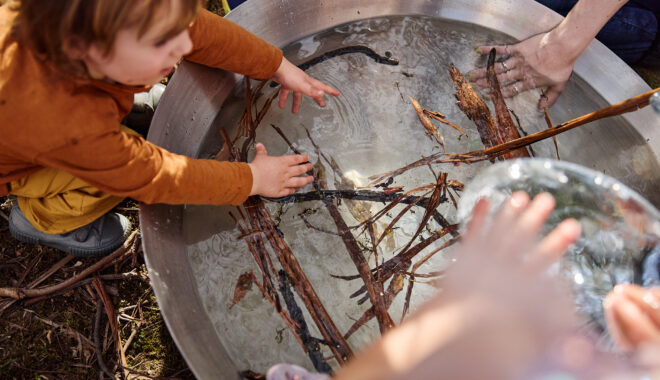
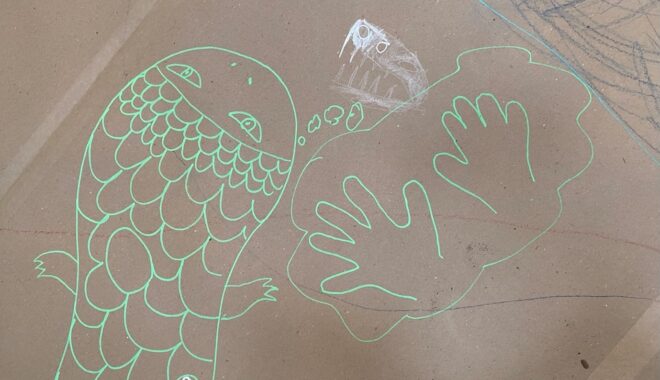
When the World Turns (schools) production photos: Sarah Walker.
TIME IS ACCESSIBILITY
Our When the World Turns performance space is very deliberately different to the schools we visit. Hundreds of plants sit on top of the scuffed linoleum, and black curtains do their best to baffle the fluorescent light, creating dark corners and shadows. It isn’t a neutral space, it conveys a tonal state that, while non-threatening, asks its audience to participate in the experience in any way they can. The options for participation are infinite: some young people sit and watch, others race around in circles, some don’t ever enter the tent.
All versions of participation are welcome, there are as many ways to interact with the work as there are people in the world, and then some.
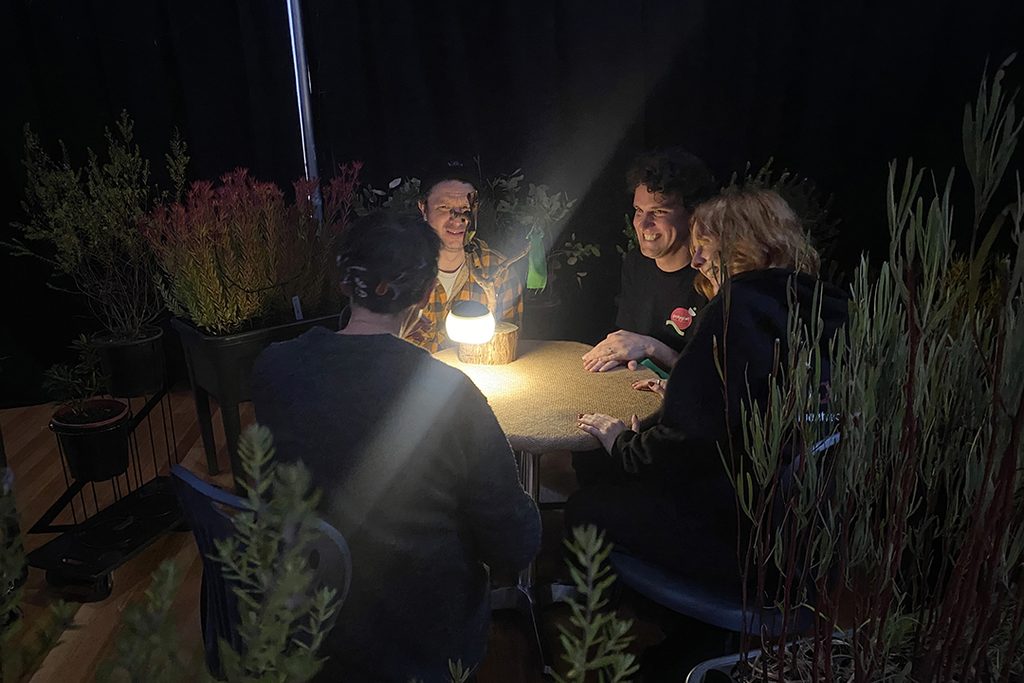
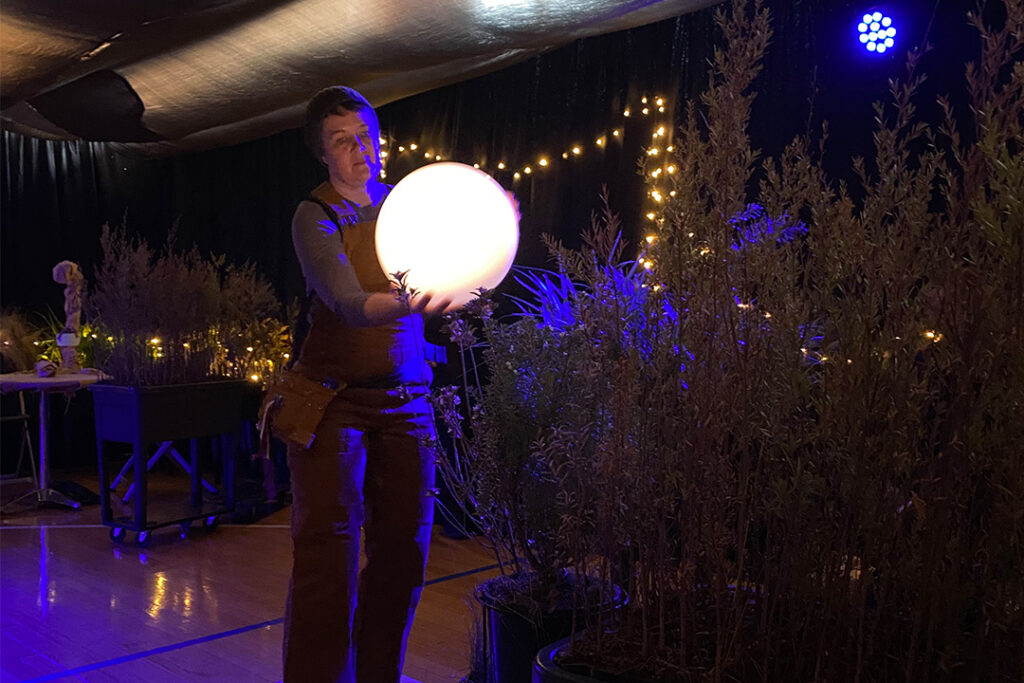
Behind-the-scenes, When the World Turns (schools).
When the production is operating best, it allows participants the space to breathe and understand things on their own timelines. This is very easy for the students, and it can sometime look like chaos, but rarely is it out of control. It does take a moment for the other adults in the room to relax and give us permission to lead. I understand this totally. They are responsible for the safety and success of the young people that they care for, it comes with so much anxiety, and it is incredibly admirable. But without fail, when we earn the trust of the schools we work at, the staff see versions of their students that they haven’t seen before. Like theatres, schools are just bustling metropolises filled with complex people trying to figure out how best to move forward together.
WORLDS ON WORLDS ON WORLDS ON WORLDS
I have seen time expand and contract and utopia exist for a moment in leaves crunching between the fingers of a Year 6 student, giddy with excitement, as they sprint through the darkness of a tent. In the voice of a child, sitting back, taking everything in from their chair. In the teacher shining a torch over the closed eyelids of a student they have known for years.
This is what I think about when I perform at schools. Inside, within a space that feels impossible but isn’t, huge inside the compacted walls.
The place where time moves differently.
A place where the flowers grow.
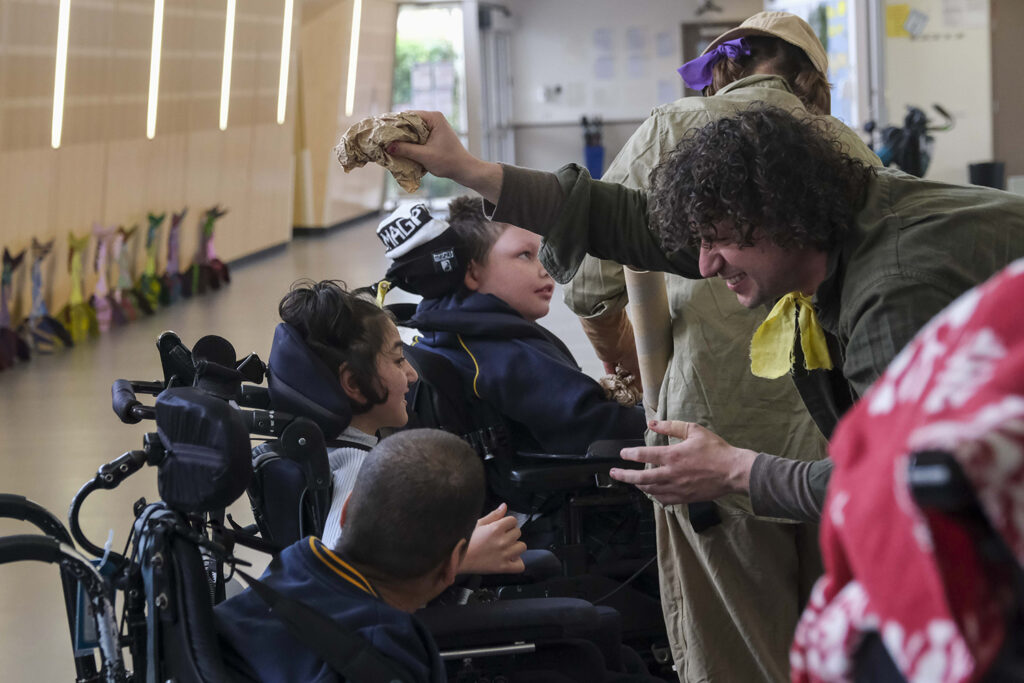
When the World Turns production photos: Suzanne Phoenix.
Thank You
When the World Turns: disability inclusive theatre in schools is a collaboration between Polyglot Theatre (AUS) and Oily Cart (UK), commissioned by Arts Centre Melbourne and generously supported by the Cassandra Gantner Foundation. The 2026 schools tour is further supported by Arts Centre Melbourne and the Victorian Department of Education Strategic Partnerships Program, Mr Mark Robertson OAM and Mrs Anne Robertson, Maureen and Tony Wheeler, Gandel Foundation, Bec Wilkinson, Wendy Kozica. Polyglot thanks our ongoing plant sponsor ecoDynamics, and SÜK Workwear.

Related news
19 Jun 2026 Artistic Reflections
Let’s Meet the Forest
Reflections on Forest Poem & illustrations by Briony Farrell, Generator artist Let’s meet the forest. You and me, together. Take me where your curiosity......