26 Oct 2026 Announcements
Creative Cultural Exchange: India 2026
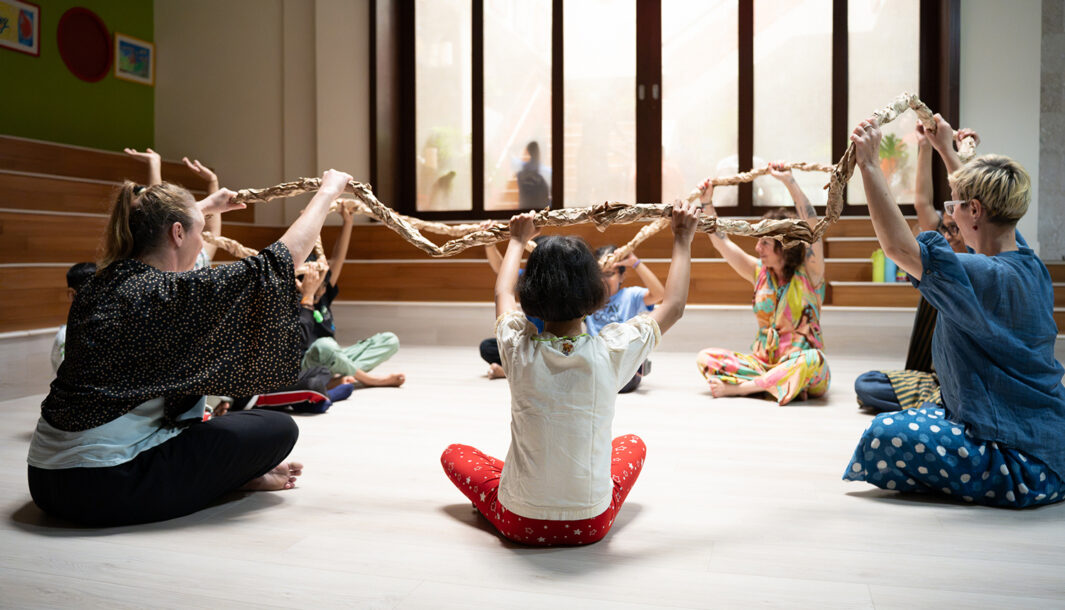
In September 2026, Polyglot Theatre embarked on the first in-person stage of a new creative cultural exchange with The Gateway School of Mumbai and Kirtana Kumar’s Theatre Lab in Bangalore.
The project centres children and young people with disability, recognising their right to participate in high-quality arts experiences. Envisaged as a long-form collaboration, this first visit to India was designed to establish strong in-person relationships between key artists and educators. Polyglot personnel in attendance: Cat Sewell (Artistic Director & Co-CEO), Rainbow Sweeny (Producer) and Sylvie Meltzer (Generator artist).
Mumbai
Across the week, we toured The Gateway School of Mumbai spaces, observed classes and Allied health sessions, and learnt about the school’s origin and pedagogy (which stems from New York, USA). We exchanged knowledge, delivered interactive workshops (based in sensory practice), and had in-depth conversations with the leadership team, including founder Indira Bodani, teachers, Allied health and support staff, parents, students, and a wider network of local artists and educators.
Gateway School has been inspired by Polyglot’s practice, particularly in the use of open-ended materials, play and child-led creative discovery. This has led to a recent development and adoption of a new pedagogy for the lower years drama and performing arts program.
Cat Sewell, Polyglot’s Artistic Director & Co-CEO, and Darshana Patwa, Gateway School Performing Arts Coordinator, recorded a podcast episode with the school Speech Pathologists (release date Dec 2026).
In partnership with the Govandi Arts Festival, we also visited the Govandi slum community, which has recently integrated dedicated child-friendly spaces – a library, study room and creative arts spaces. Supported by Govandi arts workers, we delivered a play and making workshop with local children and families.
“Wow. How is this even happening in this world!!??” Student, The Gateway School of Mumbai
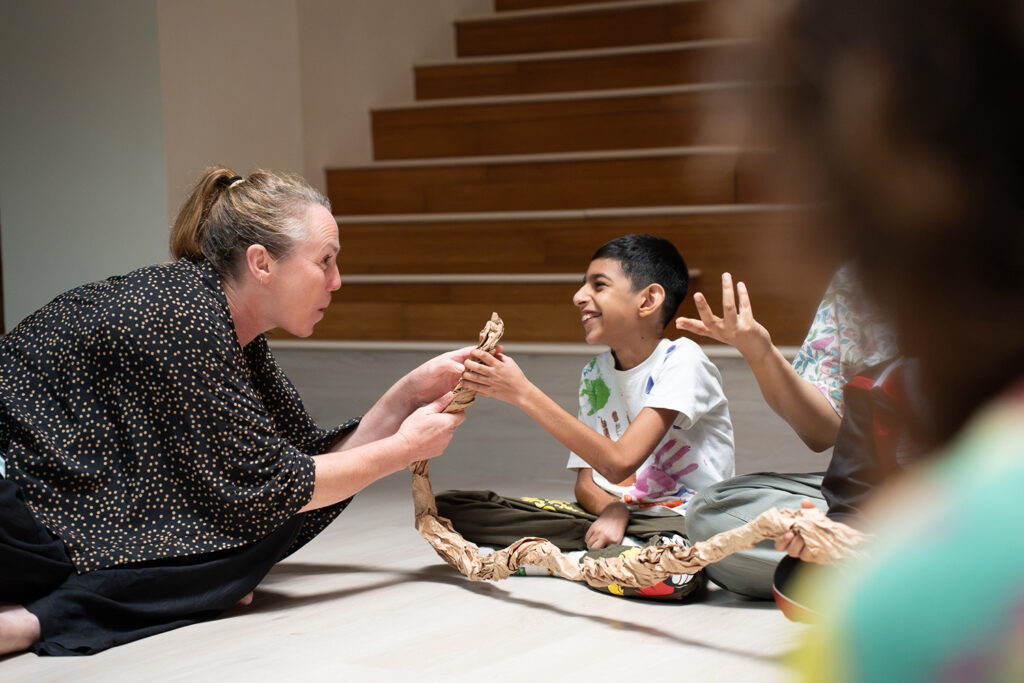
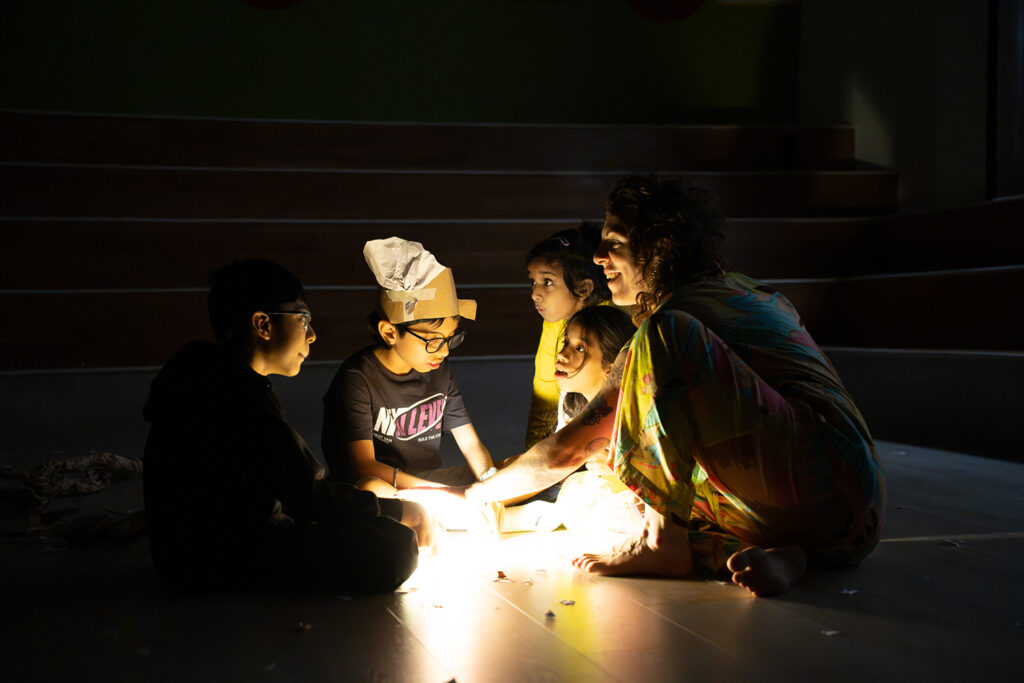
Photos: Anirudha Desai
“There is a unique kind of magic to ‘stepping out’ of your normal (way of working, thinking, living) when in a country and culture that isn’t your own. There is an inherent surrender to a different kind of discovery and learning that feels like it rewrites the notion of ‘expertise’ and reinforces the very meaning of collaboration.
Creative cultural exchanges in theatre-making, and in particular, theatre that explores accessibility and disability (with and for children) are so powerful. There’s a natural exploration around language (literally, physically and metaphorically) that potentially means work that is made or ideas that come from these exchanges (and maybe taken back to respective spaces/places) have layers to them that celebrate both the different ways things are done, and the ways putting them together can foster a new kind of conversation.” Sylvie Meltzer, Generator artist reflection
Bangalore
Theatre Lab is located at Infinite Souls Farm, a two-hour drive from Bangalore. Our creative exchange activity brought together Polyglot personnel with Kirtana Kumar (actor, director and filmmaker), Zui Kumar-Reddy (writer, editor and facilitator), Konarak Reddy (renowned guitarist), Darshana Patwa (Gateway School Performing Arts Coordinator) and Nishna Mehta (Mumbai-based theatre-maker and researcher). Marking the first in-person engagement with all three project partners, our creative explorations focused on the natural environment at the farm and in the surrounding forest.
We were then joined by high school students from Sheila Kothavala Institute for the Deaf (SKID). This was the school’s first visit to the farm, and many students’ first time out of the city. Workshops were facilitated jointly by Polyglot and Theatre Lab. Through our time together, there was a notable increase in participants’ confidence, creative expression and connection to senses observed by everyone, including the students themselves. By the end, they had even decided to co-facilitate the public event.
We also visited Ajji’s Learning Centre, a community and children’s education centre, in Jyothi Palya Village (local to Infinite Souls). Students from surrounding schools and villages were bussed in for play and making workshops. These were facilitated jointly by Polyglot, Theatre Lab and Gateway School, and assisted by Ajji’s arts workers/educators, and young adult volunteers. A burst of colour and creativity that ended up with a party with all the children dancing and celebrating.
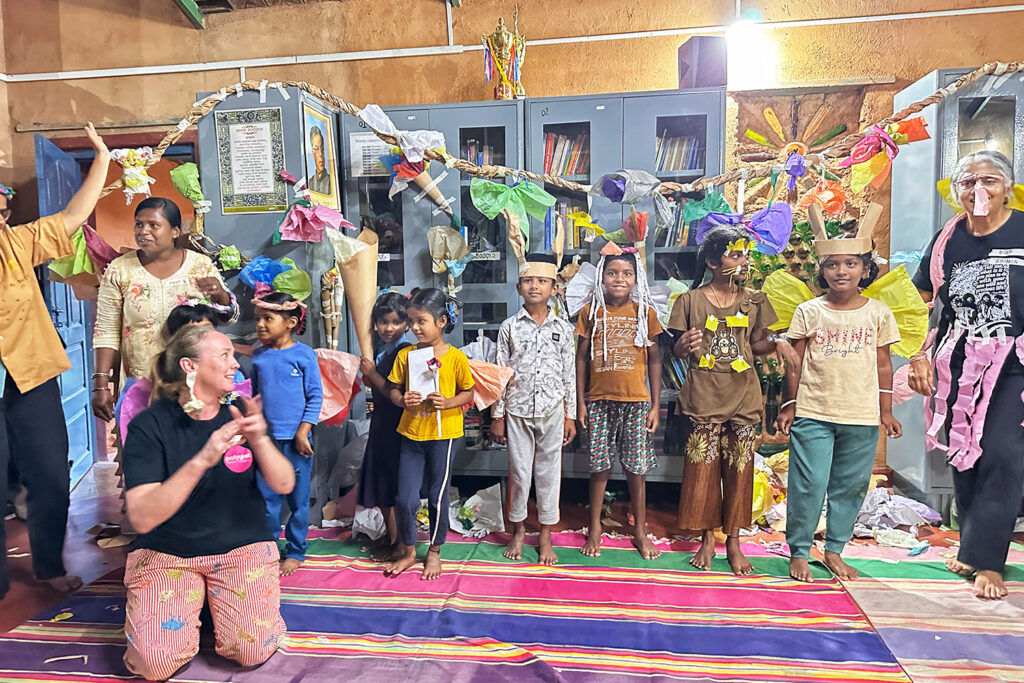
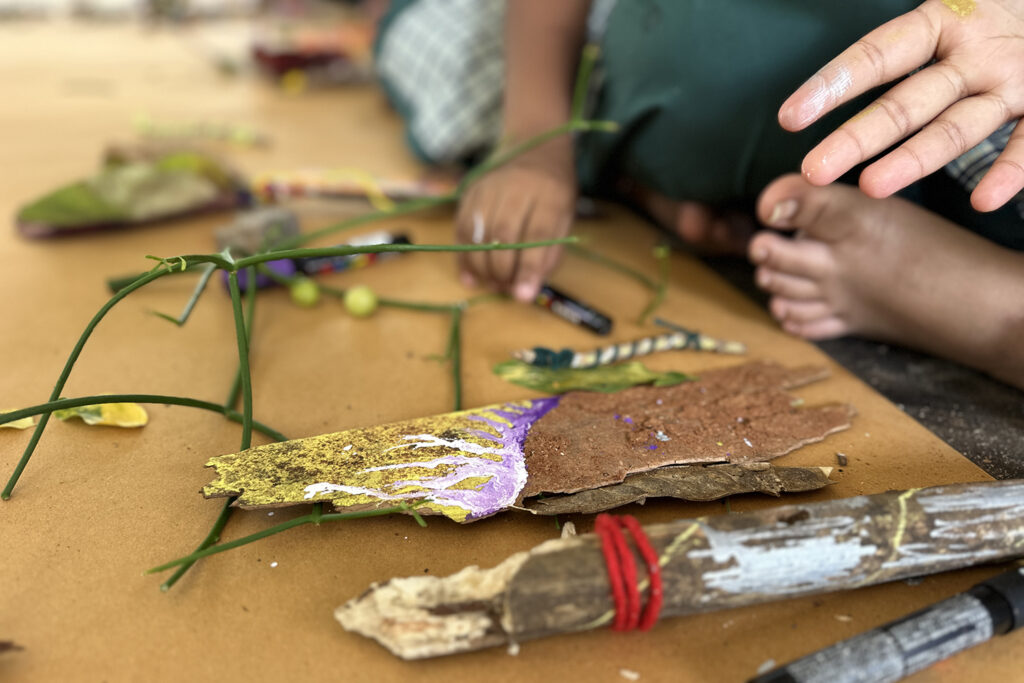
Photos: Rainbow Sweeny (left), Sylvie Meltzer (right).
The week culminated in a public event at Sabha Centre in the city. We welcomed local artists, educators, people working in the field of disability education, SKID students, teachers and families, Sabha Centre art class participants, Ajji’s staff, industry professionals and company directors. All three project partners presented, sharing their practice. Creative offerings included a gallery installation of SKID students’ work from the farm, a Polyglot workshop facilitated with SKID students, and a Gateway School workshop based on activity with students earlier in the year.
“It feels important to recognise how exchanges like these expand the meaning of and dialogue around accessibility in lots of different forms. Across our time in India we were part of so many workshops and in places that highlighted this is so many ways – whether it was the ways people have access to arts experiences, or access to locations, access to time, to resources, to even materials. We had the pleasure and privilege to bring the simple but beautiful things that Polyglot access everyday so easily and share with others how those things can be used and found in an India-context.
It felt at times that we were able to give people access to imagine the different possibilities or ways to doing things that wasn’t about changing or making better what was already being done there but could support the work to look and feel and grow in new and different ways.
I think being able to do that is a really interesting way to celebrate the way different organisations and people work. It’s like being able to witness and explore very exciting creative integration – I imagine not just from the perspective of each organisation, but personally for all the individuals involved – and the ‘flow on’ that can potentially happen outside or afterwards that would and could (and does) impact a lot of different people in different ways. Whether it’s just to have been given a moment to reflect on the way you play or engage as an artist, educator, teacher or parent, or how we think of a cardboard box, or the ways we notice natural landscapes – sharing is learning, and learning is the essence of better understanding the living experiences of all different people and ways to connect and exist in the complex world around us.
We are just so lucky in this work, that creativity is the shared language we leap from.” Sylvie Meltzer, Generator artist reflection
“At home my head is like this (exploding gesture) and here my head is like this (calm gesture).” Student, Sheila Kothavala Institute for the Deaf (SKID)
“You’ve given me the most beautiful and best memories of my life.” Participant, Govandi Community Centre, Mumbai
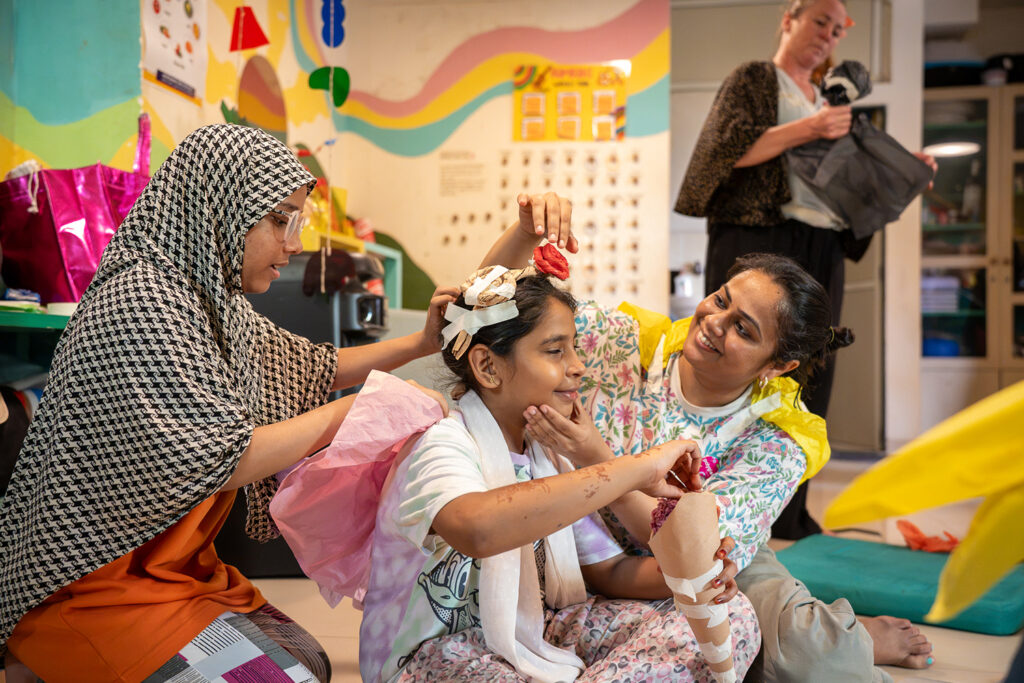
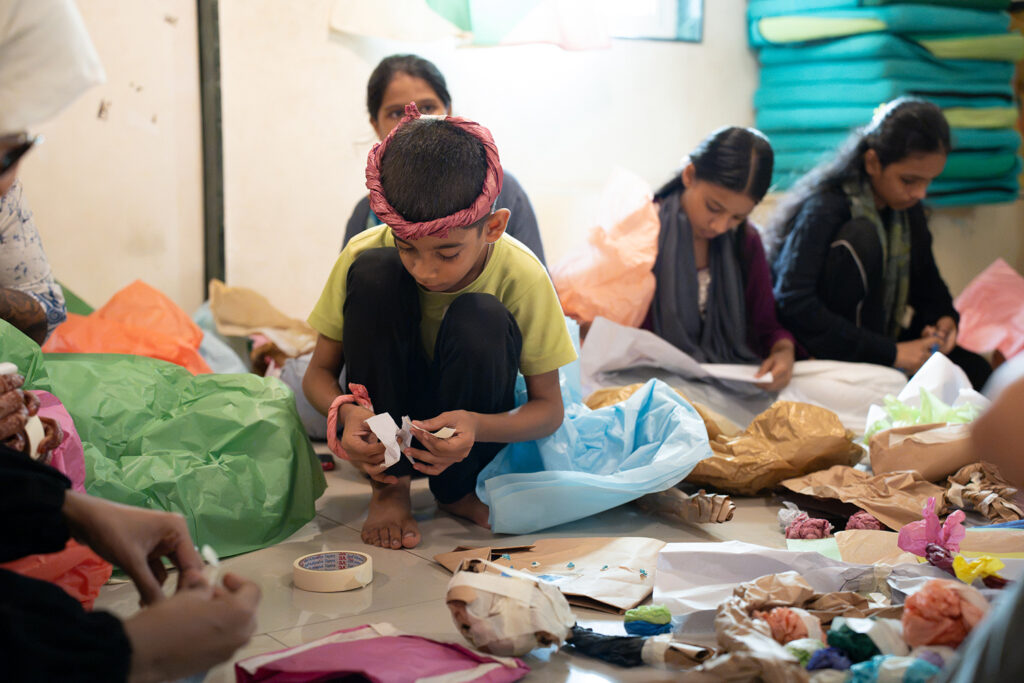
Photos: Anirudha Desai
“I’m so grateful that our students had this opportunity to just be themselves and express themselves, to interact without any hurdles of communication, to enjoy what they were doing, to not have any pressure, and it’s a very special interaction that they would not have experienced it if weren’t for this opportunity. You just had to see their faces to know that they were having fun. The kind of fun that doesn’t come to them otherwise.” Educator, Sheila Kothavala Institute for the Deaf (SKID)
“We used our imagination and could make anything out of paper… that really resonated my belief that we all are different and express emotions differently.” Parent, The Gateway School of Mumbai
“In the more recent years of my arts work I have been learning more towards an acceptance of, and celebration of my own hearing impairment – with an ever-growing desire to learn sign language and use that skill and to be able to provide access to creative experiences. Working with the deaf school in Bangalore was a reminder of what it can look and feel like when young people are seen and heard – and to be able to maybe extend that experience even more by being able to communicate, as well as listen (figuratively and literally) to different groups of people in the world inspires endlessly to commit myself to follow that path and apply it when and wherever I can now and into the future.” Sylvie Meltzer, Generator artist reflection
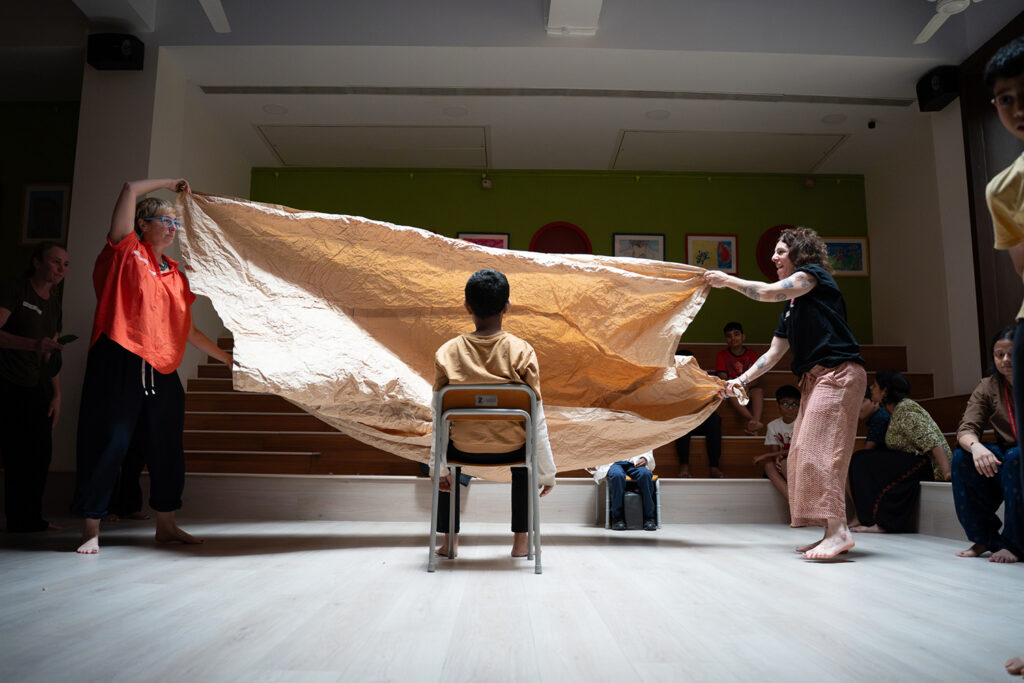
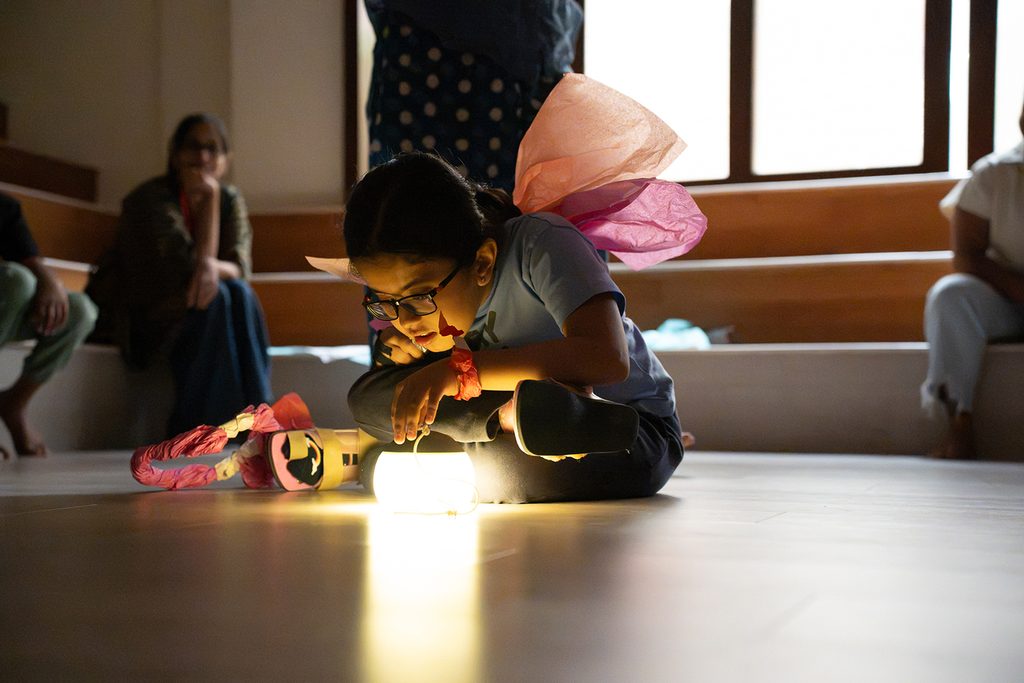
Photos: Anirudha Desai
Thank You
Polyglot Theatre and its 2026 India creative cultural exchange have been assisted by the Australian Government through Creative Australia, its principal arts investment and advisory body. Polyglot is also supported by the Victorian Government through Creative Victoria.

Related news

20 Jul 2026 Announcements
“One of the great Paper Planet moments”
In June, Polyglot Theatre was honoured to open Theater der Welt in Chemnitz with Paper Planet. Theater der Welt (Theatre of the World) is Germany’s largest festival for......